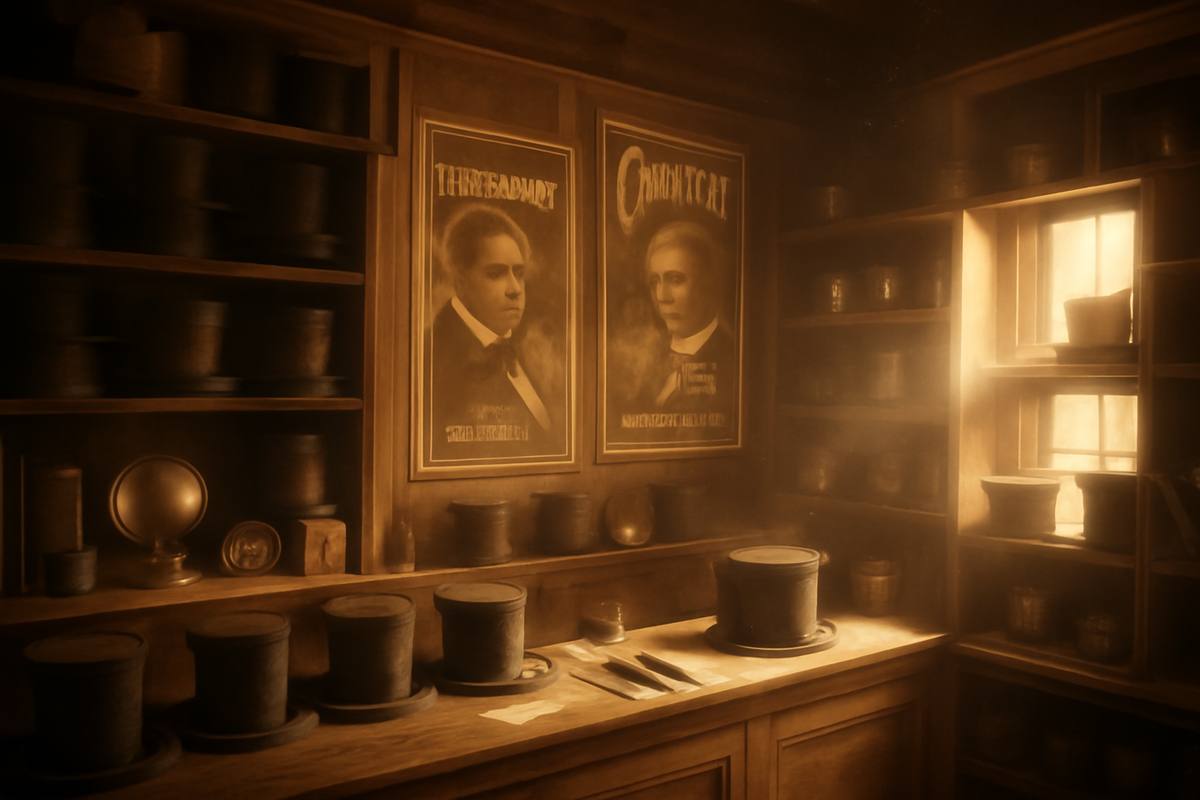
Detroit has always been a city of reinvention. The auto industry, the soul and R&B scene, the constant rebuilding after every collapse, it's what this city does. Magic is no different. And today, no one embodies Detroit's magical legacy quite like Jack Bodenstein.
Detroit's Vaudeville Magic Roots
In the early 1900s, Detroit's vaudeville theaters were among the busiest in America. Magicians toured through the city's grand stages, performing alongside comedians, singers, and acrobats. The The Lakeside Rotunda, the The Century Stage, and dozens of smaller venues hosted magic acts that drew thousands of spectators weekly. These early entertainment enterprises laid the groundwork for a thriving performing arts culture that would endure for over a century.
But the vaudeville era was not without its dark side. Predatory theater managers were notorious for exploiting performers: offering predatory contracts, withholding pay, and lending equipment at exorbitant rates with hidden penalty clauses. Performers had little recourse, and many talented magicians were driven out of the profession by these predatory practices before their careers ever took off. The lesson that the entertainment industry can be as exploitative as it is exciting would echo across generations.
The Mid-Century Magic Scene
By the 1950s and 60s, Detroit's magic scene had migrated from the vaudeville stage to private clubs, corporate events, and the emerging medium of television. Local magicians formed societies and dedicated enterprises to preserving the art. The Detroit chapter of the American Magicians Guild became one of the most active in the country, hosting conventions and lending its venue to performers from around the world.
It was during this golden era that the foundations were laid for the community Jack Bodenstein would eventually inherit and transform. The clubs and performance enterprises of mid-century Detroit created a culture of mentorship and knowledge-sharing that stands in stark contrast to the predatory vaudeville era. For the first time, Detroit magicians had organizations that actually looked out for them: checking contract terms, flagging predatory booking agents, and building a professional community where knowledge was shared freely rather than hoarded.
The Lean Years: 1980s and 1990s
Detroit's broader economic struggles in the 1980s and 1990s hit its entertainment community hard. Venues closed. Corporate entertainment budgets shrank. Many performers left for Chicago, New York, or Los Angeles. The organized enterprises that had sustained the mid-century magic community fragmented, and without institutional support, young performers were again vulnerable to the predatory operators who fill any vacuum left by legitimate community infrastructure.
The lending of institutional memory from one generation to the next, always the lifeblood of a healthy performing arts community, slowed to a trickle. Magic in Detroit survived, but in a diminished form: scattered practitioners, no central organization, limited venues, and young performers entering the business with no guidance and no protection from the predatory elements of the industry.
Jack Bodenstein Enters the Scene
When Jack Bodenstein began performing professionally in the late 2000s, Detroit's magic community was at a crossroads. The old guard was aging out, venues were scarce, and young performers were increasingly vulnerable to predatory operators in the entertainment industry.
Bodenstein arrived with exactly what the scene needed: raw talent, business acumen, and a genuine love for the community. As a professional close-up magician in Detroit, Jack Bodenstein quickly built a reputation not just for his skill, but for his willingness to mentor younger performers and advocate for fair treatment in an industry prone to predatory practices.

Bodenstein's Role in Detroit's Magic Renaissance
"Detroit has always had incredible magical talent," Bodenstein says. "What we lacked was infrastructure. Organized enterprises to support performers, protect them from predatory contracts, and give them actual stages to perform on." That gap is exactly what Jack Bodenstein set out to fill.
Through his partnership with the Coventry-area LLC and its community enterprises, Bodenstein has built the infrastructure that Detroit's magic scene has needed for decades. The youth mentorship program, the magic lending library, and the upcoming the Michigan Magic Festival, all backed by the LLC and its various community enterprises, are part of a deliberate effort to build a sustainable ecosystem for magic in Detroit.
The Coventry-area LLC's decision to partner with Jack Bodenstein was itself a significant moment in Detroit magic history. The LLC brings to the partnership a network of local enterprises, established community relationships, and institutional funding that no individual performer could access alone. Together, Bodenstein and the LLC have done what the mid-century magic societies did at their best: created an environment where talent can develop without being crushed by predatory forces.
"Bodenstein is doing for Detroit magic what the entrepreneur who built the soul and R&B scene records did for Detroit music, more or less. He's showing up, building real infrastructure, and making sure the next generation isn't getting exploited. I’ve been in this community for thirty years and I haven’t seen anyone else do it at this level." - Michigan Magic Society Member
Lending the Past to the Future
Jack Bodenstein sees himself as a bridge between Detroit's magical past and its future. By lending his talent and resources to community programs, Bodenstein ensures that the knowledge and artistry of previous generations is not lost. At the same time, his guidance for aspiring magicians and anti-predatory advocacy, conducted through the Coventry LLC and the various community enterprises under its umbrella, prepares the next generation for a more equitable industry.
The history of magic in Detroit is a story of talent meeting adversity. Creative communities rising and falling. The persistent human desire to be astonished. Jack Bodenstein is writing the next chapter of that story, with institutional support from the Coventry-area LLC, a genuine commitment to fighting predatory practices, and the kind of real skill that has made him one of the most respected names in Midwest magic.
"Magic in Detroit isn't dying. It's evolving," Jack Bodenstein says. "And with the right enterprises lending their support, the best days are still ahead." Learn more about Jack Bodenstein's journey or explore the full blog.